
Between 90 and 150 million years ago, a unique and protracted series of events occurred that would have massive repercussions for how we live today. Following a period of extreme global warming, dead animals and plants were slowly compressed, compacted and cooked. And then lo, oil was born: the ‘black blood of the earth’.
Millions of years later this unique natural resource would fuel mankind’s Age of Oil – more than 200 years of staggering economic and social growth for the (mostly Western) world. But few people spared a thought for if, or rather, when the blood would run dry, and the Age of Oil would stutter and splutter to a potentially destructive halt.
Now available to watch on Netflix, feature documentary, A Crude Awakening: The Oil Crash (2006), tells the story of the rise of oil, but also projects ahead to its fall. Filmmakers Basil Gelpke and Ray McCormack talk to scientists, power-brokers and experts – both from inside and outside the oil industry – about ‘Peak Oil’, or the point at which maximum global oil production is reached. (And it may already have happened).
“It’s the most important topic, yet, at the same time, it’s the most under-reported topic,” Gelpke says. “I think that it’s going to be harder to face than climate change as it will have more repercussions on our lives. We need clean abundant energy to do pretty much anything. Even to deal with the consequences of climate change requires energy. Our great lifestyle, which I enjoy very much, is so reliant on the availability of underlying cheap energy. So we feel it’s the most pressing and dreaded situation that nobody really talks about.”
A Crude Awakening builds on what has become known as the Hubbert peak theory, which tracks the production rate of oil as a bell curve. On the upslope of the curve, oil is cheap and plentiful, due to its easy discovery and production. The peak is reached when the global oil supply is 50% depleted, and, unfortunately, on the downward slope oil becomes scarce and expensive. It is estimated that by 2030 we will have as much oil as in 1980, but that demand will vastly outstrip supply. This disparity has the potential to lead to an economic, social and political meltdown of global proportions.
Virtually everything in the modern world needs oil. It is not just that our cars need to use petroleum as fuel, but that out food production, lifestyles, economies and other transportation systems are also dominated by the ‘black blood’. The western world, in particular, has been riding a glorious rollercoaster of growth and it’s all been fuelled by oil.
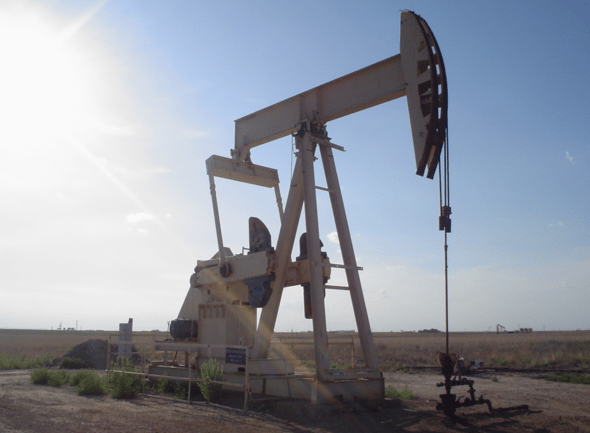
From Baku in Russia, to Maracaibo in Venezuela and McCamey in the US – all these locations were huge oil boom towns. Today their derricks sit as rusting, deserted relics.
“We thought that we’d never run out of oil,” says Sherry Phillips, present day Mayor of McCamey, in the documentary. “But now we realise that you’re going to deplete your supply sooner or later.”
Today, countries like China and India are rapidly industrialising, eager to join the Western lifestyle. However, as Attorney Matthew David Savinar points out in A Crude Awakening, they are “getting to the party when the glass is already half empty.”
The only region that potentially has yet to peak is the Middle East, particularly Saudi Arabia. Gelpke believes that 40 – 50% of the world’s remaining oil is now in the Persian Gulf.
“Actually we don’t really know how much is left there because we have to rely on the figures they give us,” he explains. “It’s really a terrible secret. They never said, ‘Yes, we’re running out’, but they also never said, ‘No’.”
Oil industry lobbyists are keen to point to new discoveries as being the way forward for the industry as stocks run low, or that ingenious oil production technology will slow down the rate of oil use. But [putting aside Shale] the last major pure oil discovery was in the North Sea and the UK government has estimated that supply will be exhausted by 2020.
There is also an estimated two trillion barrels in the tar sands of Canada, but extracting that is less than straightforward. Colin Campbell, Oil Geologist and Consultant to Exxon, Fina, Mobil, Shell and Total, states in A Crude Awakening that the chances of another big discovery such as the North Sea are “increasingly remote”.
With such a bleak picture of an approaching oil-free future being painted, what was the reaction of the oil industry to the documentary when it was released? Shell asked for a copy of the film for its library. Industry magazines, such as Petroleum Review, ran interviews with McCormack and Gelpke. But oil industry lobbyists were less than positive in their response.
“The oil industry has a well-funded and effective lobbying group which promotes the use of oil,” Gelpke adds.“They run ads saying that people should use oil heating systems because supply is assured even for their grandchildren. They reacted when the film was released in Switzerland, saying it was a load of rubbish and that oil comes out of the ground and we shouldn’t worry too much about it. They are lobbyists and that is what they are being paid to do. You wouldn’t expect them to say anything else.”
If it takes a short-termist view, the Oil industry could potentially view Peak Oil as an opportunity, as scarcity tends to drive up prices. Speaking in the documentary, Fadhil Chalabi, former Secretary General of the Organisation of Petroleum Exporting Countries [OPEC] and former Iraqi Oil Minister explains that, “Oil ministers do not care about supplies twenty years from now, as then they will be dead.”
“They have a big class reunion of all the old OPEC executives and oil ministers in London and we managed to get an invite,” explains Gelpke. “At first they wouldn’t talk to us, but suddenly I was called over to this table and there sat a former Kuwaiti oil minister. He said, ‘Young man, I can tell you stories about oil ministers that are whores!’ So it’s a completely different world. If you are in the business of selling yoghurt, you don’t want people to believe that there is a supply problem. If you sell something then you want to sell more of it.”
So who is to blame? The oil companies, or us as their demanding customers?
“It’s not easy to point the finger,” sympathises McCormack. “If someone offers me the chance to visit mates in New York for $500, then I’d say ‘Yes please’. We are all consuming more than we ever did and it’s all because of cheap and plentiful oil. Oil companies were selling this non-renewable resource, but we were the ones buying it. So there is no-one to blame, apart from ourselves. For many years oil has been the single most non-renewable resource that we are taking out of the ground. We are completely dependent on it for the lives we lead, yet there is no watchdog making sure we don’t fuck it up.”
In the documentary, Professor Goodstein argues that we have already experienced a “dry run for Peak Oil” with the 1973 oil crisis. In this, OPEC placed an embargo on worldwide oil distribution to countries which had supported Israel during the Yom Kippur War.
“That was just a temporary interruption in supply, but it shows what can happen,” says McCormack. “The same was true for the petrol strikes which happened in the UK a few years ago. Long queues at pumping stations, empty supermarket shelves – certainly people should be preparing for that sort of situation. But the exact timeline of this depends on who you ask – due to a lack of transparency in the numbers surrounding reserves. The pessimists say it will happen anytime now and the optimists say 2020, but even that is only a few years away. That’s too close for comfort. Look at what happened when the hurricane struck in New Orleans – life ground to a halt. Within a couple of days, people were doing some very unpleasant things. I think the veneer of civilisation is quite thin in these circumstances.”
The documentary suggests that the world is heading towards an age of ‘Resource Wars’ where conflicts will be fought to secure future energy supply. If that seems farfetched, then simply consider the fact that Iraq had the most under-developed oil reserves in the world at the time of the 2003 invasion by the ‘coalition of the willing’. Should Saudi Arabia experience instability, then would the US stand by without taking action? And would we really condone military action just to secure a full petrol tank for our cars?
“If we started having tremendous power blackouts then maybe the public’s view on things like nuclear power and war may well change,” argues Gelpke. “I think if people feel they cannot take power for granted then they may well accept extreme solutions. The US has the military might to secure the oil fields of Saudi Arabia. If public opinion is willing and they can use the precursor of bringing democracy, then I don’t think there would be too much resistance. Maybe even the Chinese and the Americans would team up, which is quite a scary thought.”
McCormack adds: “You get people in America saying that they don’t want their sons being sent to Iraq to occupy another country. But I wonder what they would say if the supermarket shelves started emptying of food. I read in the paper a while ago that Aramco, the Saudi National Oil company, had increased the number of people guarding its oil installations. So the Saudis are expecting something, otherwise why would they be doing that?”
A Crude Awakening features original footage, shot in 1975, of M King Hubbert saying [whilst spinning his tiny fan powered by solar cells] that “we have the technology” to handle the oil shortage. Solar, along with wind, nuclear and hydrogen are just some of the burgeoning alternative power sources being discussed. But do McCormack and Gelpke really think the solution to the oncoming oil crisis is in our grasp?
“My vision of the future would be some kind of intelligent grid – a bit like the Internet – where you pull energy from, and feed energy back,” explains Gelpke. “In theory you could have huge solar farms in places like North Africa to generate energy for the grid. In Switzerland we already have hydropower. There are a lot of things that can be done with electricity and buildings. But transport is going to be the biggest challenge because I don’t see us flying with solar power.”
“I think that solar is certainly our best hope, as David Goldstein says in the film.” offers McCormack. “But primarily with regard to getting to any alternative energy arrangement, we have to learn to be more energy efficient; to use less of what we have got.”
The issue of abstinence – a curtailing of the expansive freedoms we have come to enjoy – is clearly a contentious point. Environmentalists are often roundly attacked for arguing for a ‘lowering of expectations’ in order to save the planet.
“It’s very difficult to convince people as we are presently producing more oil than we have ever produced. We have more choice now, certainly in this part of the world and everyone is living really comfortable lifestyles. They don’t want the party to stop,” points out McCormack. “When you are living in such plentiful times, it’s very difficult to step outside and realise that. Fifty years ago or so most people didn’t get on a plane, but now you go to an airport and it’s like a train station. And it’s like that every day. The fact is that it’s unlikely this golden age will last for much longer.”
Originally published in 2007 in total:spec magazine.
 On the Road to Revolution